
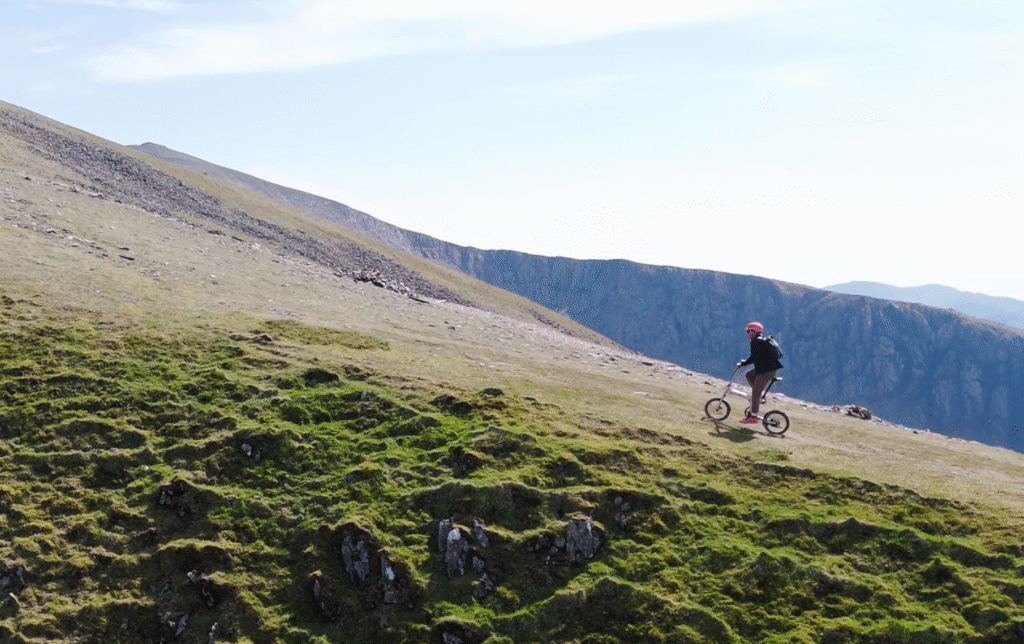
FLIT Project Snowdon: Your Questions Answered
A deep-dive into how we completed this project
When we first came up with the idea for Project Snowdon, we weren’t entirely sure if it was even possible. The FLIT M2 was designed for the city – lightweight, compact, and perfect for the daily commute, but absolutely not meant for conquering a mountain. The comments we were seeing on social media made us curious though;
“Small wheels are wobbly.” “Folding frames aren’t strong enough.” So we thought, why not take the M2 somewhere that could prove otherwise?
Fast-forward a few months, a trip to a mountain bike trail, and a lot of planning later, and we finally made it happen. Taking the FLIT M2 up and down Snowdon, the highest mountain in Wales, was one of our biggest challenges yet, both for the bikes and the team behind them (mostly Crispin, who did all the cycling).
Now that the video series is complete, we’ve had lots of great questions about what really
went on behind the scenes. So, let’s dig into some of the most common ones and share what we learned from the journey.
How did the battery perform, and how many did we use?
One of the main things people wanted to know was how the FLIT M2’s battery coped with such a demanding route, and we’re proud to say it exceeded every expectation. In the video, Crispin mentions multiple times that the battery percentage took a bit of a nose dive halfway through our filming day, however, We completed the full ride, both the ascent and the descent, using just one battery, and still had 7% left by the time we returned to the base.
That’s seriously impressive considering the sustained climbing, steep trail, and the stop-start nature of filming.
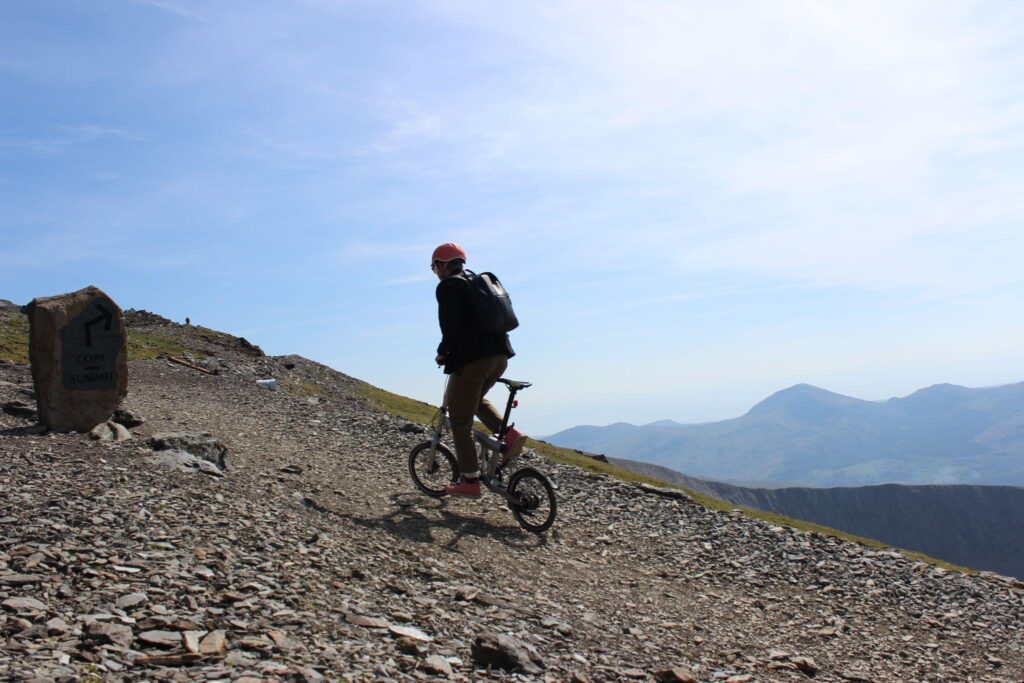
The M2’s efficient power delivery and light frame worked together to make the most of every bit of charge. For an e-bike built for commuting, that’s an exceptional result and one that made us even prouder of what the M2 can do.
How much of the route did we actually cycle?
We cycled around 80% of the full route, up and down the mountain.
The remaining sections were too technical or rocky to ride safely, but the majority of the climb and descent were done on the bike. It wasn’t just a one-way challenge, we wanted to prove that the M2 could handle the entire journey.
Because we were filming the whole thing, we also repeated some sections several times to get the perfect angles. That meant cycling back down to a lower point, resetting cameras, and then riding the same stretch again. So while the route itself was 80% rideable, Crispin’s legs definitely felt like they’d done it twice over.
The experience showed us how adaptable the M2 really is: nimble enough for tight, technical parts of the climb but sturdy enough to handle the long descent.
The Behind The Scenes video and the intro clips show Crispin being pushed up the hill by one of our videographers. What’s that about?
We’ve had comments saying that this defeated the purpose of the challenge. Was the bike unable to handle this climb, or was there something else behind it?
In one of the clips, you can see Crispin getting a bit of a push as he starts off on a steep section.
This one is absolutely not what it looked like! We left this shot in the video because we didn’t only want to show the challenge aspect of Project Snowdon, but also how our “The Scenic Commute” video was shot.
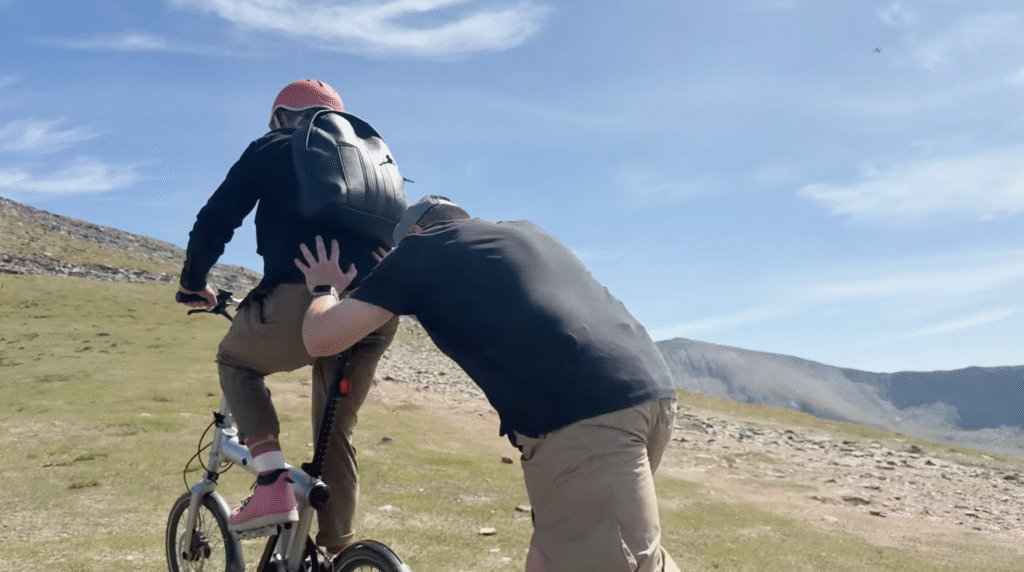
The Set-up…
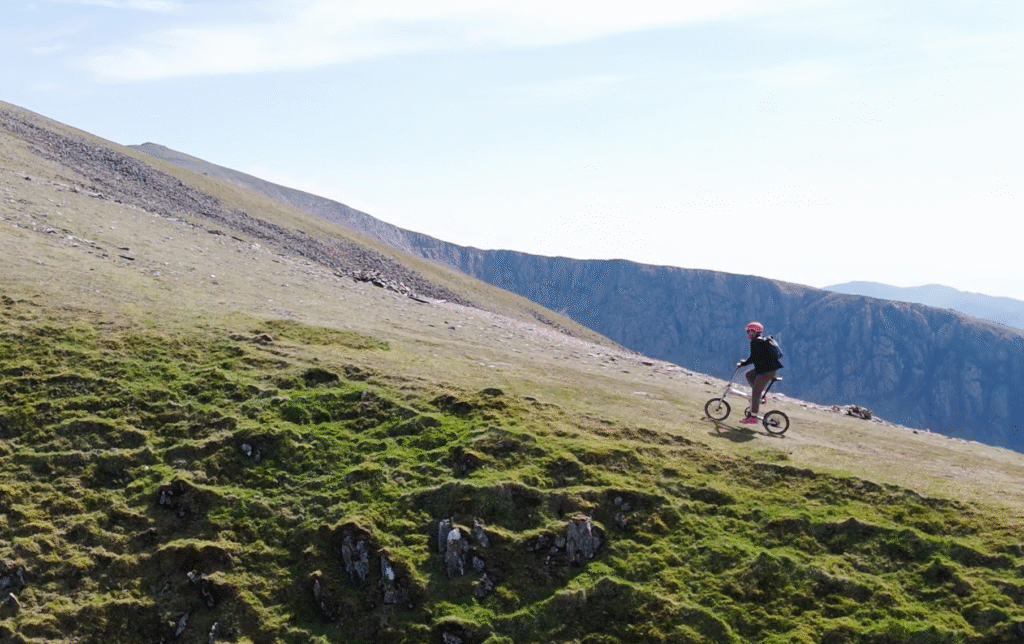
vs. the final shot
Crispin getting pushed was not because the bike couldn’t handle the hill, but because of a small setup mix-up…
We’d accidentally used a bike with a 48T chainring instead of the standard 44T, which made it harder to get going from a standstill on steep gradients. Once moving though, the M2 handled both the climb and the descent beautifully. Crispin said “It would’ve been helpful to not have the 48T, but mix-ups happen! On a climb like this, cadence is important. You need to have some momentum to get up a steep hill and unfortunately, to get this specific shot, it was just impossible to do that myself.”
So yes, that little shove was a friendly boost to get things moving, not a sign of struggle. It’s all part of the fun (and the learning).
Why was it so quiet at the top of Snowdon?
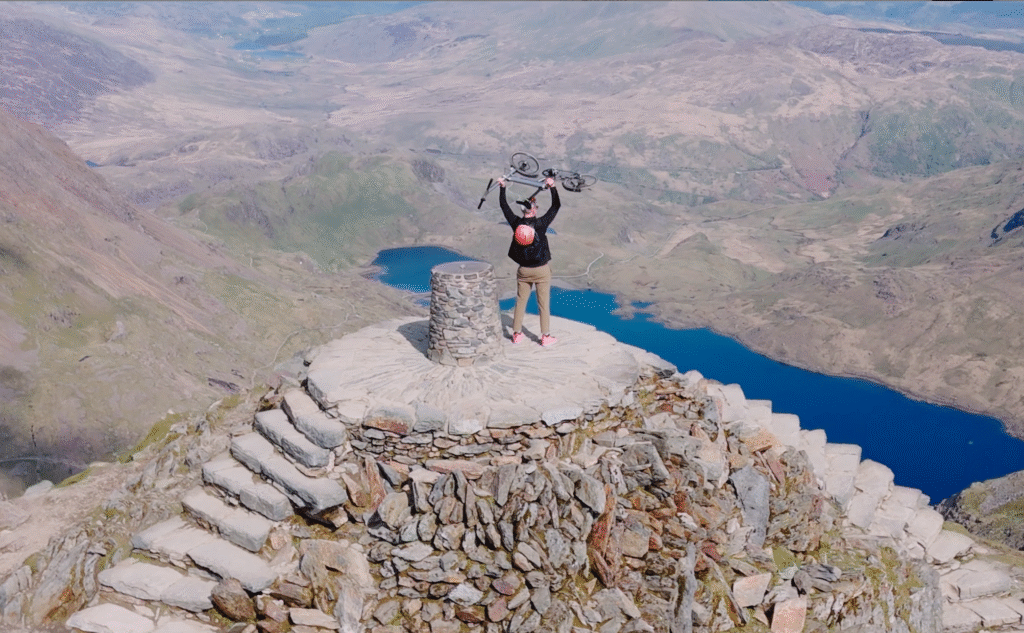
If you’ve watched the video, you might’ve noticed how calm and still it feels at the summit. That’s because we timed the project perfectly, filming in late April before the summer crowds arrive.
At that time of year, the trails are quieter and far less busy, which gave us the rare chance to ride freely and film safely without getting in anyone’s way. The quiet also made the experience feel even more surreal, just the team, the bike, and an incredible view stretching in every direction.
By the time we got to the top of Snowdon, it was around 4pm, which helped significantly with crowd control. Most tourists also ended up taking the train to the top of Snowdon, and in between trains, it was extremely quiet.
Reaching the top and then riding back down with that kind of silence around us was something none of us will forget.
What are the cycling restrictions on Snowdon?
We’ve had a few comments about us destroying walking routes on Snowdon by cycling on them with an e-bike, but many people don’t realise that some of Snowdon’s paths are bridleways. This means that designated paths can be used by pedestrians, cyclists and horse riders.
Snowdon does have restrictions in place between May and September, from 10 a.m. to 5 p.m. These rules help keep the trails safe and enjoyable for the large number of walkers who visit the mountain in peak season.
We planned our ride carefully to avoid those restricted dates and times so we could ride both up and down within the allowed windows. It meant we could enjoy the challenge responsibly, respecting the environment and everyone else who uses the mountain.
Did we make any changes to the bikes for the climb and descent?
We wanted to keep the bikes as close to standard as possible, the same FLIT M2 our customers ride every day, but we did make a few small adjustments to handle the rougher mountain terrain:
- A narrower saddle to handle the long hours of climbing (and descending) A personal preference of Crispin’s.
- Metal Quick-release pedals for better grip and control, especially on the descent.
We had originally wanted some wider tyres with a grippier tread for stability on loose rocks and gravel, but unfortunately we couldn’t find ones that fit the 16 inch wheel size.
Beyond that, the bike was completely standard – just thoughtful preparation and a lot of confidence in our design.
What assistance level did we use?
We used a mix of assistance levels depending on the terrain, but for most of the ride, Crispin used assistance level 5. We think using level 5 made the fact that we only used one battery even more impressive!
For the descent, the motor naturally provided minimal input, letting the brakes and rider handling do the work.
It really highlighted how intuitive the M2’s power delivery feels, supportive when you need it, invisible when you don’t.
So, did we achieve what we set out to do?
Absolutely.
The goal of Project Snowdon wasn’t just to reach the summit, it was to prove that the FLIT M2 (as a small wheeled, folding ebike) can do more than most people think it can. From the long climb to the technical descent, the bike handled everything we threw at it.
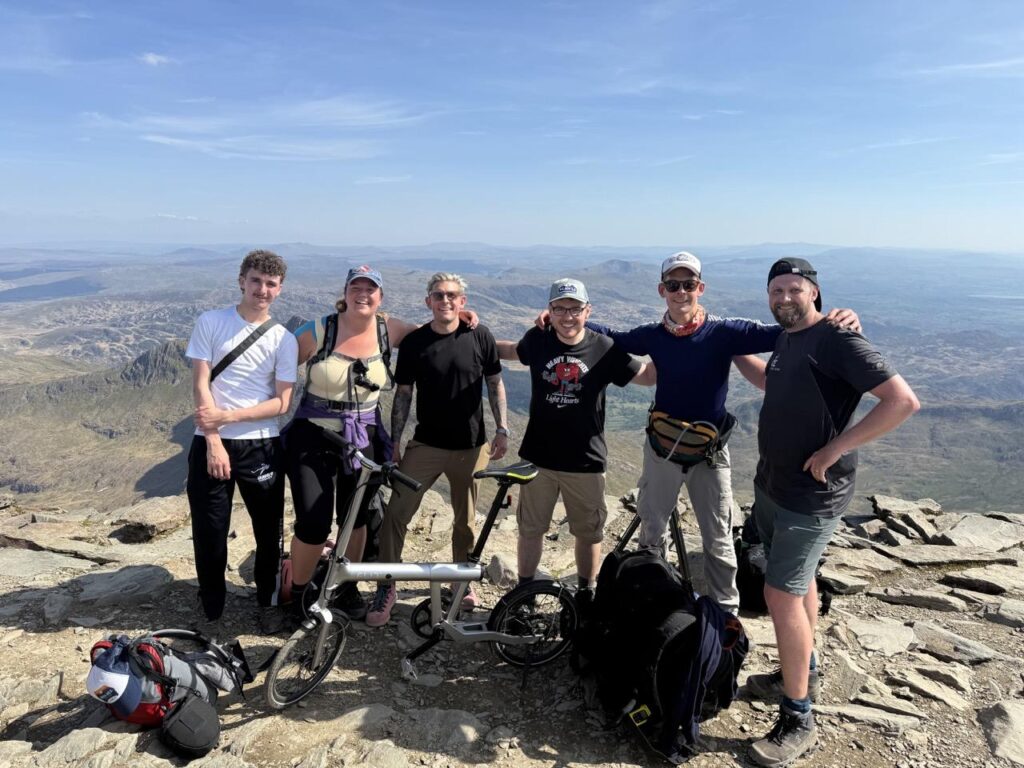
It’s not a mountain bike, and that wasn’t the point. It’s a commuter e-bike that showed it’s far more capable than anyone expected. We learned a ton about how robust the M2 really is when pushed outside its comfort zone.
By the end of the ride, we’d cycled up, cycled down, captured incredible footage, and proven to ourselves (and to everyone watching) that this little folding bike can punch way above its weight.
What’s next?
Now that we’ve wrapped up Project Snowdon, it’s time for the next challenge. We can’t say too much just yet, but we’re already planning something new.
In the meantime, you can catch the full story, the behind-the-scenes footage, and the final film on our YouTube channel:
👉 Watch Project Snowdon on YouTube
Or if you want to read more about Project Snowdon, take a look at our dedicated page where you can find more information and photos:
👉 Read more about Project Snowdon
And if you want to learn more about the FLIT M2, the folding e-bike that took on Snowdon, head here: